


On August 4, 2026, the U.S. Department of Commerce (DOC) announced a new periodic review of the antidumping duty order on hot-rolled coil (HRC) from China, covering export shipments made from April 1, 2025 to March 31, 2026. For steel exporters, importers, buyers, and supply chain service providers connected to U.S.-bound HRC trade, this is a development worth close attention because it may affect duty treatment, customs compliance, and import cost calculations over the next 12 to 18 months, with added scrutiny likely around transshipment through the EU and re-export models involving processing in third countries.
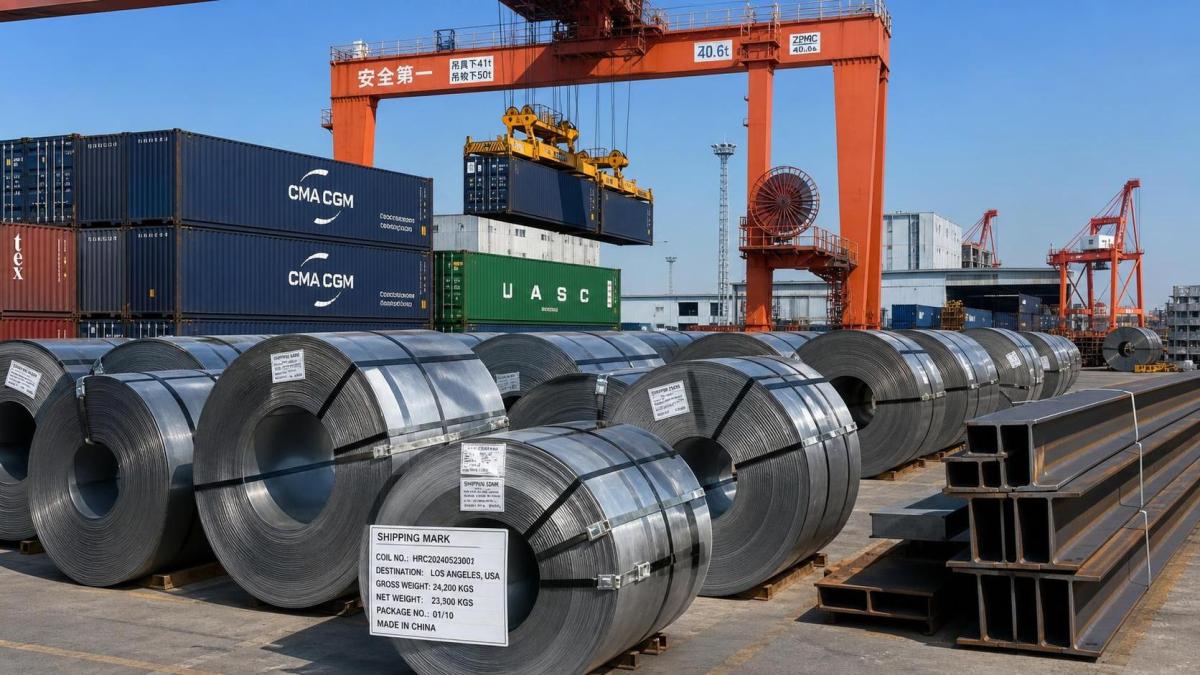
What the DOC announcement confirms
The confirmed fact is that the DOC has formally initiated the first period of review under the antidumping duty order covering Chinese-origin hot-rolled coil. The review applies to export batches shipped during the period from April 1, 2025 through March 31, 2026. Based on the information provided, this review is expected to bear directly on future duty-rate application for exporters shipping to the United States, as well as on customs clearance compliance and cost accounting for import-side buyers.
The provided information also makes clear that compliance risk is rising for trade structures involving EU transshipment and re-export after processing in third countries. Beyond these points, no further official findings or outcomes have been confirmed in the input.
Where the pressure may show up across the trade chain
Exporters shipping to the U.S. market
From an industry perspective, Chinese HRC exporters with U.S.-linked business may be affected first because the review can influence how duty rates are applied in the coming 12 to 18 months. The main business impact may appear in shipment planning, customer quotations, document preparation, and customs-related coordination. What deserves closer attention is whether existing transaction records, shipment timing, and origin-related documentation are consistent and complete for the reviewed period.
Importers and buyers managing landed cost
U.S.-side importers and procurement teams may feel the impact through landed-cost calculations and supplier selection decisions. Analysis shows that even before any final outcome is known, the review itself can change how buyers assess price exposure, compliance burden, and delivery certainty. For these participants, the key issue is not only price, but also whether future entries and procurement assumptions remain aligned with possible duty-rate changes.
Supply chain and trade service providers
Logistics firms, customs-related service providers, and trade compliance teams may face more pressure where transactions involve multiple jurisdictions. Observably, trade models that rely on EU transshipment or third-country processing before re-export are specifically exposed to greater compliance attention under the scenario described in the input. The operational impact may center on document traceability, route design, declarations, and the consistency of supporting materials across shipment stages.
Processors and downstream manufacturers using HRC
Companies that buy HRC for further processing or manufacturing may not be the first subject of the review, but they can still be affected indirectly through procurement lead times, supplier communication, and cost assumptions. What deserves closer attention is whether upstream suppliers begin adjusting offer validity, delivery commitments, or documentation requirements in response to the review process.
Practical points companies should watch now
Track official wording and procedural developments
Analysis shows that companies should distinguish between the launch of a review and any later decision that may result from it. The immediate signal is procedural, but the wording of subsequent official communications can shape how businesses assess exposure. Firms with affected shipments should therefore watch for later DOC statements or rule clarifications related to the review period and its application.
Recheck shipment records tied to the reviewed period
For business conducted between April 1, 2025 and March 31, 2026, documentation discipline becomes more important. Exporters, traders, and service providers should pay close attention to shipment records, origin-related materials, transaction files, and customs-facing paperwork connected to U.S.-bound HRC business. The practical issue is whether records can support a coherent compliance narrative if examined more closely.
Scrutinize complex routing and processing models
What deserves closer attention is the higher compliance risk flagged for EU transshipment and processing-and-re-export structures involving third countries. Companies using these models should not treat them as routine logistics arrangements. The practical focus should be on whether routing logic, processing steps, and supporting documents are internally consistent and can withstand closer review.
Align commercial communication with compliance reality
Analysis shows that procurement teams, exporters, and intermediaries should keep customer communication closely tied to what is actually confirmed. Pricing discussions, delivery expectations, and contract execution may all be affected by uncertainty around duty treatment and customs compliance. In practice, this means internal teams should keep sales, shipping, and documentation functions aligned so that external commitments do not run ahead of regulatory reality.
Why this matters beyond the announcement itself
Observably, this development is better understood as an active compliance and cost signal rather than a final market outcome. The review does not by itself establish a new definitive result in the information provided, but it does indicate that participants in China-to-U.S. HRC trade should reassess risk in current operating models. From an industry perspective, the most important point is that tariff treatment, customs execution, and trade-route design may now need closer coordination than before.
It is also more appropriate to understand this as a development that still requires continued observation. The announcement establishes that the review process has started; it does not, based on the provided information, settle the eventual commercial impact for every company. That is why the market should pay attention not only to the existence of the review, but also to how businesses with reviewed-period exposure prepare for its downstream effects.
How the market may best read this stage
At this stage, the industry significance lies less in immediate conclusions and more in the shift in operating attention it requires. For exporters, importers, buyers, and supply chain intermediaries connected to Chinese-origin HRC, the issue is not simply whether a review exists, but how that review could affect rate application, clearance compliance, and transaction planning over the next 12 to 18 months. A neutral reading is that this is a meaningful procedural development with practical consequences, but not yet a fully determined outcome.
Basis of this report and what still needs verification
This article is based on the user-provided news title, event date, and event summary. For developments of this kind, commonly relevant source types may include official government notices, company disclosures, industry association updates, reporting by authoritative media, and trade or standards-related documents. No specific official source link was provided in the input, so the exact official reference still needs ongoing verification. Continued attention should be directed toward later DOC communications, any procedural updates tied to the review period, and practical changes affecting duty application, customs compliance, and trade structures involving transshipment or third-country processing.