


On July 31, 2026, the U.S. Department of Commerce moved forward with both a five-year sunset review and an administrative review covering hot-rolled steel coil from China under HS 7208/7211. For companies involved in exports to the U.S., steel processing, importing, customs clearance, and downstream profile trade, this is not just a procedural update: it directly affects compliance handling over the next 12 months, including cash deposit obligations and the tariff treatment ultimately applied to relevant shipments.
What the July 31 notice formally covers
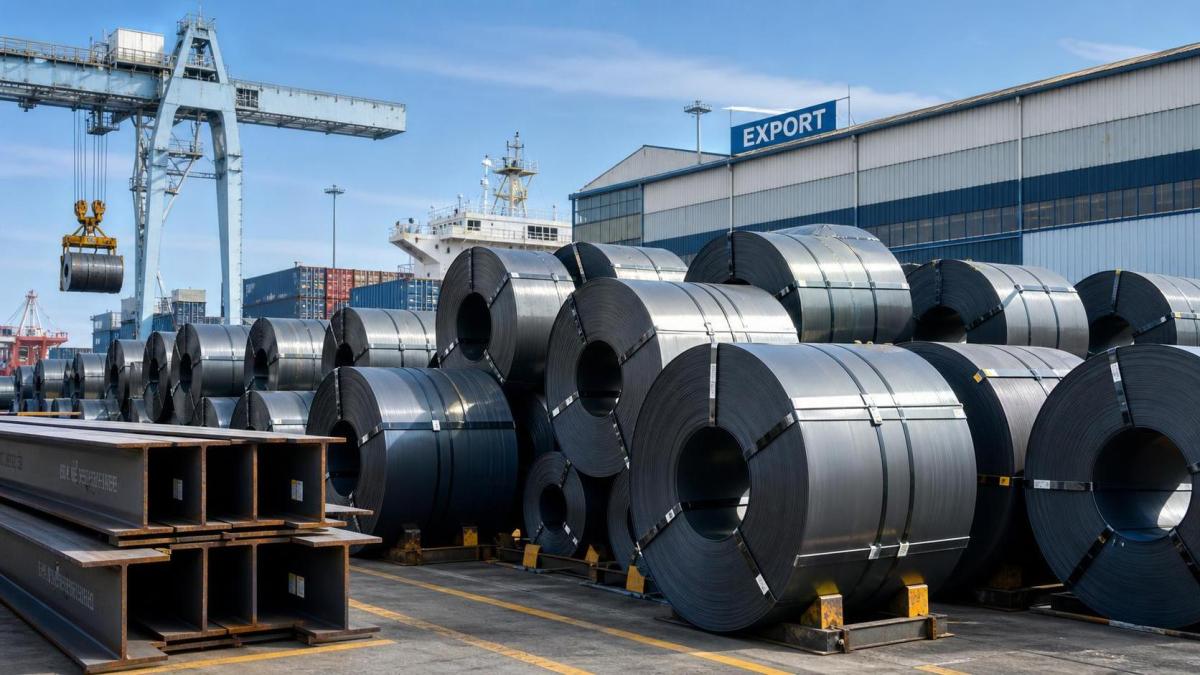
The confirmed information is limited but commercially significant. The U.S. Department of Commerce announced on July 31, 2026 that it had initiated a sunset review of the anti-dumping and countervailing duty orders on Chinese hot-rolled steel coil, while also launching an administrative review at the same time. The products specifically referenced are hot-rolled steel coil under HS 7208/7211, and the stated business impact extends to exports to the U.S. of hot-rolled coil, H-beams, and downstream profile products within the coming 12 months. The input information also makes clear that customs compliance, deposit payments, and final duty rate application are the immediate operational areas affected.
Where the pressure is likely to appear across the chain
Trade flows tied directly to U.S.-bound shipments
From an industry perspective, exporters and importers handling U.S.-bound steel products are the first group exposed to the change. The reason is straightforward: review activity affects how shipments are documented, cleared, and financially planned. What deserves closer attention is whether existing transactions, pending deliveries, and newly quoted orders are aligned with the latest review status and related customs requirements.
Processing and conversion businesses linked to coil and sections
Companies converting hot-rolled coil into H-beams or downstream profiles may also face indirect pressure. Analysis shows that even when the reviewed scope is centered on hot-rolled coil under the cited HS codes, the commercial effect can extend into products whose export execution, cost assumptions, or customer commitments depend on the treatment of upstream steel inputs. In practical terms, processing firms need to watch how review developments affect order timing, landed-cost calculations, and customer communication.
Import compliance and supply chain service functions
Customs teams, brokers, logistics coordinators, and supply chain service providers are likely to feel the impact through documentation control and clearance execution. The input information specifically points to origin-proof chains and supplier qualification reassessment. That means service-side participants need to pay closer attention to document consistency, traceability, and the readiness of supporting files used in customs and duty-related handling.
What companies should examine now
Supplier qualification should be reviewed against current exposure
Observably, one of the clearest immediate tasks is to recheck supplier eligibility and supporting records. This is not only a sourcing question but a compliance question. Importers and buyers should verify whether their supplier files, product descriptions, and transaction records can support the treatment applied to U.S.-bound shipments under the ongoing reviews.
The origin documentation chain needs tighter control
The input information explicitly highlights the need to reassess the origin-proof chain. For companies with multi-stage processing, third-party logistics involvement, or cross-border documentation handoffs, this becomes a critical operational point. What deserves closer attention is whether certificate flows, invoice descriptions, shipment records, and product traceability materials are complete and internally consistent before goods reach U.S. customs procedures.
Cost structures should be tested against duty-related uncertainty
Analysis shows that the commercial effect is not limited to compliance paperwork. Since cash deposits and final applicable rates are identified as affected areas, companies should stress-test pricing, margin assumptions, and contract execution plans. This matters especially for orders with long delivery cycles, where a mismatch between quoted cost and later duty treatment may create avoidable commercial friction.
Policy language and business execution should be tracked separately
It is more appropriate to understand this stage as a live review process rather than a settled commercial outcome. Companies should therefore distinguish between the fact of the review having started and the eventual operational consequences that may emerge as procedures advance. Internal teams handling sales, customs, sourcing, and customer service should stay aligned so that external commitments are not made on assumptions that have not yet been confirmed.
Why this matters beyond a single procedural notice
As an editorial observation, this development should be read as a concrete compliance and transaction signal rather than as a final market conclusion. The confirmed fact is that the review process has been initiated and that it will affect customs compliance, deposits, and final duty treatment for relevant exports over the coming year. The part that still requires observation is how businesses adjust their documentation discipline, supplier screening, and order management in response. In that sense, this is more than a short-term headline, but it is not yet a closed result.
How the market is best reading this stage
At this point, the most balanced interpretation is that the July 31 action creates a heightened operating requirement for companies connected to Chinese hot-rolled steel coil and related downstream exports to the U.S. It should be understood primarily as an active regulatory development with immediate compliance relevance and near-term commercial implications. The industry significance lies less in dramatic conclusions and more in the need for disciplined review of suppliers, origin documentation, and cost assumptions while the process continues.
Basis of this article and what still needs verification
This article is based on the user-provided news title, event date, and event summary. For developments of this type, commonly relevant source categories include official government notices, company disclosures, industry association updates, authoritative media reporting, and trade or standards-related documentation. A specific official source link was not provided in the input, so the precise source document still needs continued verification. The main follow-up points to monitor are any further official wording, review-related procedural updates, and any clarifications that affect customs treatment, deposit obligations, and final rate application in actual trade execution.