


On July 19, 2026, the U.S. Department of Commerce (DOC) announced the second periodic review (POR2) of the antidumping duty order on hot-rolled steel sheet and strip (HRSS) from China, covering export shipments made between October 1, 2024 and March 31, 2025. The development matters because it does not stop at procedure: it reopens how duty rates may be calculated and brings renewed attention to exporter cost structures, related-party transaction compliance, export pricing files, and origin-related documentation that can affect trading decisions over the next 6 to 12 months.
What the DOC has formally put in motion
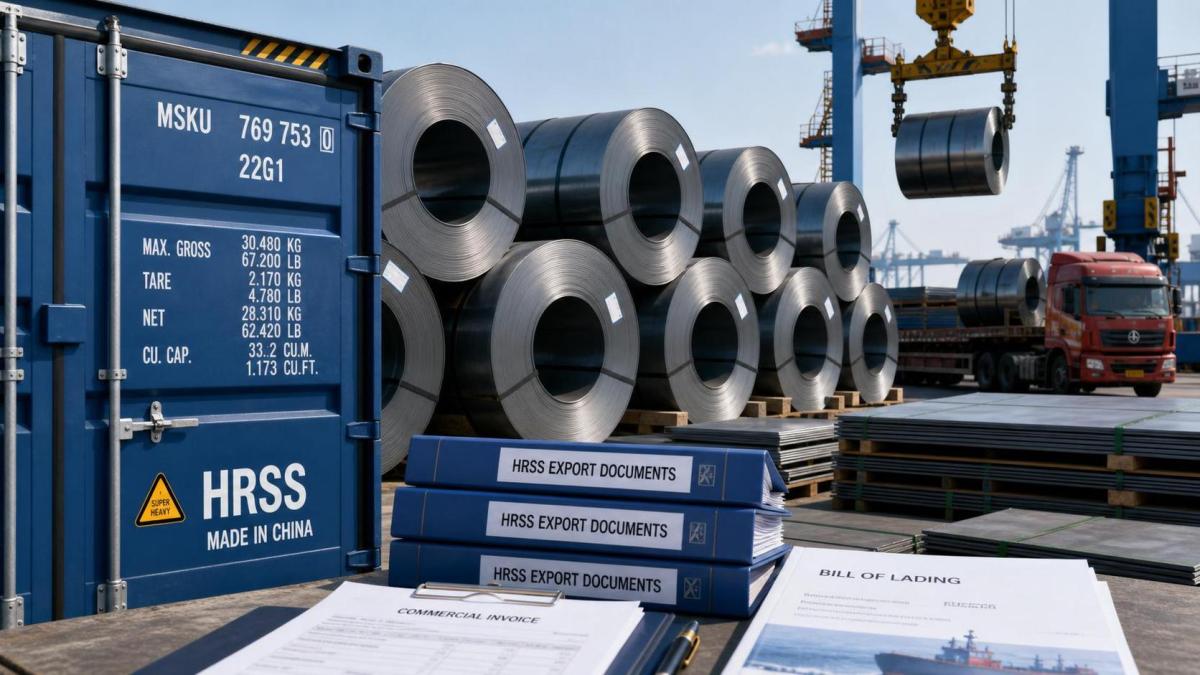
The confirmed facts are limited but commercially significant. The DOC has formally initiated the second periodic review of the antidumping duty order covering HRSS originating in China. The review period stated in the announcement runs from October 1, 2024 to March 31, 2025. According to the event summary provided, the review will revisit duty rate determinations and examine exporter cost structures as well as compliance issues involving related-party transactions. The same summary indicates that the process will directly affect export quotation strategy to the U.S., along with documentation requirements tied to certificates of origin and price filing records. It also notes that overseas importers need to coordinate with Chinese suppliers in advance to refresh trade documentation and assess alternative supply-chain options.
Where the commercial pressure is likely to appear first
Export offers and contract positioning may tighten
From an industry perspective, exporters shipping HRSS to the U.S. are the first group likely to feel the effect because quoted prices for upcoming business may need to reflect uncertainty around future duty treatment. The practical pressure point is not only the sales price itself, but also the internal support behind that price, including cost records and files that can withstand scrutiny if the review changes the way transactions are assessed.
Import-side procurement teams face document coordination risk
For overseas importers and procurement teams, the issue is operational as much as financial. The summary specifically points to the need for earlier coordination with Chinese suppliers on trade documents. That means the immediate concern is whether purchase files, shipment records, origin-related documents, and price support materials remain aligned across both sides of the transaction. Any mismatch could complicate customs handling, internal compliance review, or supplier approval workflows.
Supply-chain service providers may see planning adjustments
Supply-chain service providers, including parties involved in trade administration and delivery coordination, may also be affected because the review introduces a reason to recheck document sets before shipment or entry processing. Analysis shows that where buyers are already considering alternative sourcing paths, the pressure may shift to scheduling, supplier substitution review, and handoff accuracy between commercial, logistics, and compliance functions.
Downstream users may need to revisit sourcing assumptions
Manufacturers and processing companies that rely on imported HRSS-linked supply may not be directly named in the review, but they can still be exposed through procurement timing and landed-cost assumptions. What deserves closer attention is whether sourcing plans built on earlier price expectations still hold once suppliers begin adjusting quotations or requesting more detailed trade documentation support.
What companies should watch in the near term
Keep quotation logic and supporting records consistent
Analysis shows that one of the most immediate tasks is to make sure export quotations, internal cost support, and transaction records tell the same story. Because the review will examine cost structures, companies involved in relevant shipments should pay close attention to whether current and archived pricing files are complete, traceable, and internally consistent.
Recheck related-party transaction documentation
The event summary specifically mentions compliance scrutiny around related-party transactions. It is therefore more appropriate to understand this as a document-control and review-readiness issue, not just a tariff issue. Companies should closely watch whether intercompany or related-party trade records are organized in a way that supports the transaction narrative reflected in export and import paperwork.
Update origin and price filing materials early
Another practical area is origin-related proof and price filing materials. The provided summary indicates that these documents may be affected, so companies should monitor whether existing templates, supporting attachments, and approval routines remain fit for use in upcoming U.S.-bound business. Where document packages are prepared across multiple teams or counterparties, early alignment becomes more important than last-minute correction.
Build flexibility into procurement and supplier planning
Observably, the instruction for overseas importers to assess alternative supply-chain options is a signal that procurement teams should not treat this as a paperwork-only development. That does not confirm a specific supply shift, but it does justify reviewing backup suppliers, delivery timing assumptions, and the commercial impact of potential changes in export offers over the coming months.
How this development is best understood now
As an editorial observation, this news is better read as an execution-stage signal than as a final market outcome. The review has been formally initiated, which is an established procedural change with direct compliance and pricing implications. At the same time, the input provided does not include final rate outcomes, detailed enforcement guidance, or shipment-level case results. For that reason, the market should view this as a live rule-administration development that has already become relevant in practice, while still requiring close observation of how document expectations and commercial responses evolve.
Why the market should stay measured
The industry significance lies in the combination of three elements already identified in the provided information: rate recalculation, scrutiny of cost structures and related-party compliance, and the effect on quotation and documentation practices over the next 6 to 12 months. A neutral reading is that the event is not merely a headline about a review period; it is a near-term compliance and trade-management issue for exporters, importers, and procurement teams handling U.S.-linked HRSS business. It is more appropriate to understand this as a concrete operating signal with further implementation detail still worth watching.
Basis of this article and what still needs verification
This article is based on the user-provided news title, review period, and event summary. For developments of this kind, source types usually associated with verification include official announcements, releases from regulatory authorities, customs or trade-administration information, industry association updates, standard-setting or compliance-related documents, and reporting by established business media. No specific official source link was provided in the input, so the underlying notice and any subsequent interpretive materials still need ongoing verification. What remains worth tracking includes later official wording, practical compliance interpretation, changes in tender or procurement documentation, market feedback, and how affected companies actually implement document and sourcing adjustments.