

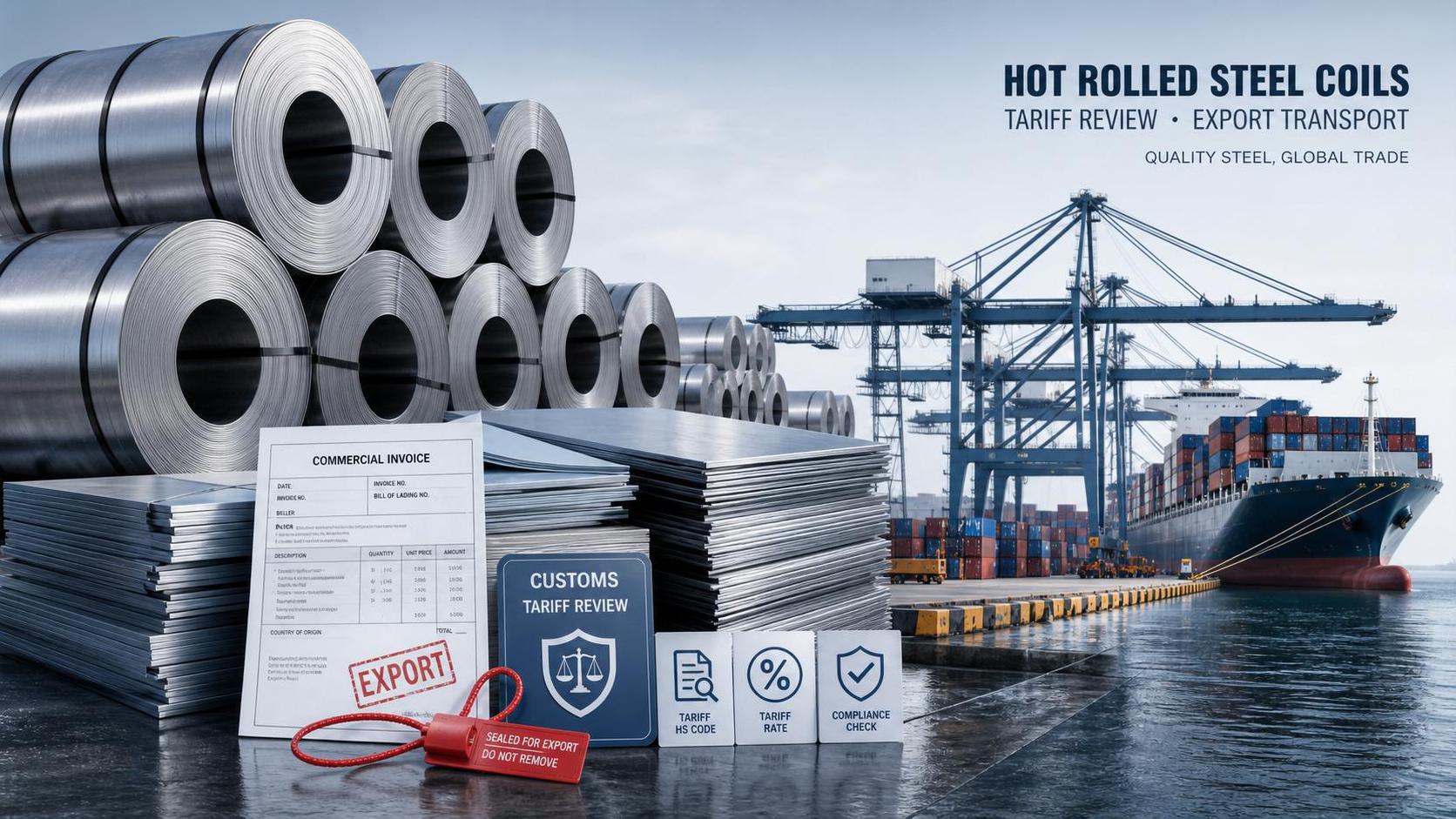
On July 11, 2026, the U.S. Department of Commerce announced an expedited sunset review of the anti-dumping duty order on hot-rolled steel sheet from China, while keeping the current duty rates of 208.49% to 256.44% in place and requiring exporters to submit compliance responses within 30 days. For steel exporters, importers, distributors, and supply chain service providers, this is not just a procedural update: it directly affects market access to the United States, landed cost calculations, customs planning, and near-term sourcing decisions.

What the official action confirms
The confirmed facts are limited but commercially significant. The U.S. Department of Commerce formally initiated the first expedited sunset review of the anti-dumping duty order covering hot-rolled steel sheet originating in China on July 11, 2026. At the same time, the existing anti-dumping duty rates of 208.49% to 256.44% remain in force. Exporters are also required to provide compliance responses within 30 days. Based on the provided information, the review has a direct bearing on U.S. market access for Chinese steel exporters, customs clearance costs, distributor inventory strategy, and importer sourcing assessments.
Where the pressure is likely to show up first
Export-side access and filing discipline
From an industry perspective, Chinese exporters are the first group affected because the review is tied directly to continued access to the U.S. market under an existing anti-dumping framework. The immediate operational impact is concentrated in compliance filing, internal document preparation, and transaction planning. What deserves closer attention is the 30-day response requirement, because any delay or inconsistency in submission may affect how exporters manage ongoing U.S.-related business exposure, even though the provided information does not specify further procedural consequences.
Importer sourcing and landed-cost recalculation
U.S.-facing importers and procurement teams are affected because the maintained duty rates materially change cost assumptions for hot-rolled steel sheet purchases from China. The main impact is likely to fall on supplier selection, purchase timing, customs cost forecasting, and substitution planning. Analysis shows that importers should pay close attention to trade documentation, product classification consistency, and the practical viability of alternative supply sources, since the existing duty range remains in place during the review.
Distributors and inventory planning
Distributors and channel operators may feel the effect through inventory positioning and replenishment decisions. Where existing inventory plans assumed more stable import conditions, the continued duty burden can alter stocking logic, turnover expectations, and downstream price discussions. Observably, this is less about a new product rule and more about the execution environment around supply continuity, customs cost pass-through, and inventory risk management.
Supply chain intermediaries and delivery coordination
Freight coordinators, customs-facing service providers, and other supply chain intermediaries also need to monitor the review because document readiness and shipment timing become more sensitive when trade remedies remain active. The relevant business links are customs processing, handoff scheduling, and coordination around exporter submissions. Even without additional official detail in the provided input, these parties should treat documentation accuracy and transaction traceability as practical control points.
What companies should watch now
Prepare the compliance response window carefully
Analysis shows that the 30-day filing requirement is the most immediate actionable point in the current notice. Exporters should verify whether their internal records, shipment documents, and compliance materials are organized well enough to support a timely response. This should be understood as a current procedural priority rather than a distant policy signal.
Recheck purchase assumptions and supplier exposure
Importers and procurement teams should reassess whether existing sourcing plans still work under the maintained duty rates. The practical issue is not only price, but also whether procurement schedules, supplier qualification logic, and replacement options remain workable if U.S.-bound orders need adjustment. The provided information does not confirm any further rule change beyond the maintained rates, so this remains an area for controlled reassessment rather than a definitive market shift.
Review contract, delivery, and customs documentation alignment
What deserves closer attention is document consistency across contracts, shipping records, customs-related paperwork, and internal product descriptions. Where anti-dumping measures remain active, inconsistencies can quickly become operational risks for clearance, cost allocation, or downstream dispute handling. The input does not provide detailed enforcement language, so companies should treat this as a compliance watchpoint.
Follow later wording and execution signals
Observably, the current announcement gives a clear compliance timetable and confirms the existing duty range, but it does not provide every execution detail a business may need. Companies involved in exports, imports, or distribution should therefore continue monitoring subsequent official wording, implementation practice, and any related changes in procurement or tender documentation that may reflect how market participants are adjusting.
Why this should be read as an execution signal
Analysis shows that this development is better understood as an active enforcement and continuity signal than as a purely symbolic review step. The maintained duty rates and the 30-day response requirement mean the issue has immediate operational relevance for companies already exposed to U.S.-China steel trade. At the same time, it would be premature to treat the current notice as a complete picture of downstream execution outcomes, because the provided information does not include detailed follow-up procedures, company-specific treatment, or broader market response.
How to interpret the current stage
At this stage, the event points to a rule environment that is already affecting transactions, rather than a policy idea that remains abstract. The most reasonable reading is that businesses should treat it as a live compliance and trade-planning development with direct implications for market access, customs cost, inventory decisions, and sourcing alternatives. It is more appropriate to understand this as a concrete execution signal that still requires continued observation as implementation details and market reactions develop.
Basis of this article and what still needs verification
This article is based on the user-provided news title, event date, and event summary. For developments of this kind, relevant source categories typically include official government notices, regulatory authority releases, customs or trade administration information, industry association updates, standard-setting documents, and reporting by established professional media. A specific official source link was not provided in the input, so the underlying notice and any later updates still need ongoing verification. What also remains worth watching includes later policy wording, practical compliance interpretation, changes in tender or procurement documents, market feedback, and how affected companies implement their response measures.