


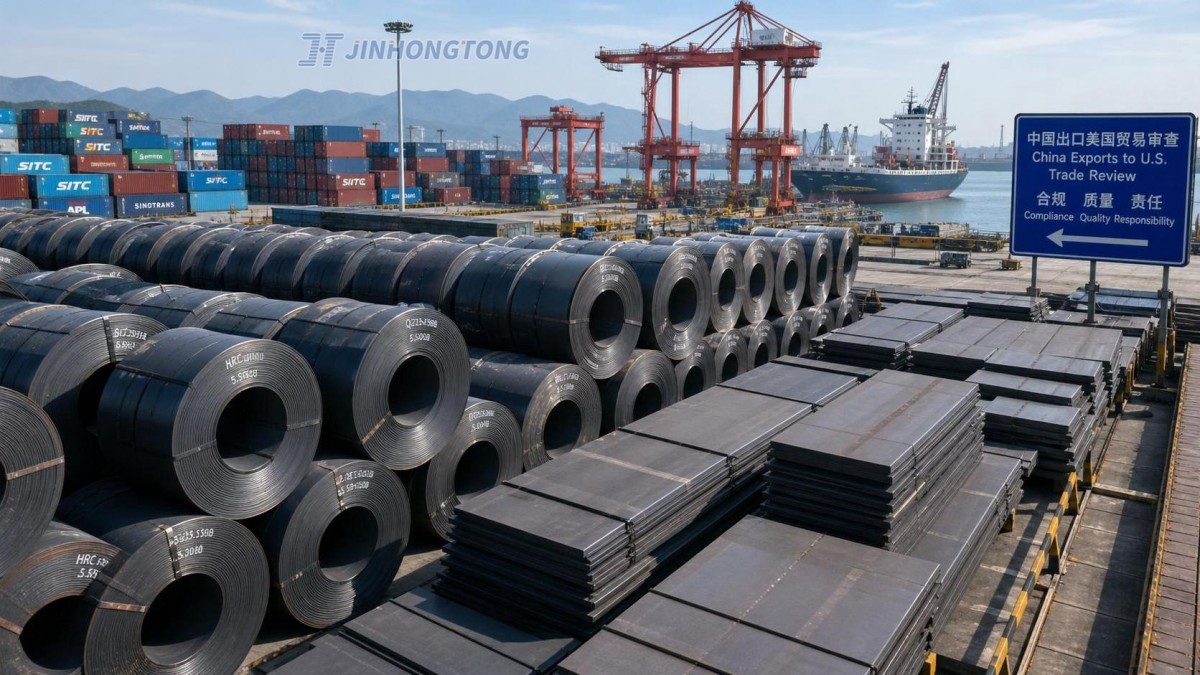
On June 27, 2026, the U.S. Department of Commerce announced the launch of an annual antidumping duty review covering Chinese hot-rolled steel products under HTS 7208-7211. For companies shipping to the U.S., this matters beyond policy wording alone: the review period covers exports made from April 1, 2025 to March 31, 2026, and the outcome is directly tied to Q3 2026 export pricing, customs cash deposit arrangements, and average clearance timing. Traders, importers, manufacturers using these products, and supply chain service providers all need to pay close attention to document readiness and pricing exposure.
What the announcement confirms
The confirmed fact is that the U.S. Department of Commerce initiated an annual review of the antidumping duty order on Chinese hot-rolled steel products on June 27, 2026. The products involved fall under HTS 7208-7211.
The review covers export shipments made during the period from April 1, 2025 to March 31, 2026. According to the provided information, this review will directly affect the duty rate determination for shipments to the U.S. from the third quarter of 2026 onward, the applicable customs deposit ratio, and the average customs clearance cycle.
The provided information also makes clear that importers need to prepare certificates of origin and cost breakdown documents in advance, while also assessing the risk of supplier-side price adjustments.
Where the pressure is likely to appear first
Export transactions may face repricing pressure
From an industry perspective, direct trading companies and exporters are likely to feel the impact first because duty rate determination and customs deposit requirements affect quoted prices and transaction terms. The key issue is not only the listed selling price, but also whether contracts signed for Q3 shipment windows still reflect the latest duty-related risk.
What deserves closer attention is whether existing quotation logic, margin assumptions, and delivery commitments remain workable once review-related adjustments begin to flow into U.S.-bound business.
Import-side operations may slow at the documentation stage
For U.S. importers and customs-facing operators, the practical impact may concentrate in document review and clearance timing. The provided information specifically points to certificates of origin and cost composition files, which means document completeness and consistency may become more important in routine shipment handling.
Observably, this can affect customs preparation, communication with brokers or service providers, and shipment scheduling where timing is sensitive.
Manufacturers and downstream buyers may need to revisit delivery assumptions
Processing manufacturers and downstream buyers that rely on hot-rolled steel in cross-border supply arrangements may also be affected indirectly. The core reason is that changes in supplier pricing and longer average clearance time can alter procurement timing, landed-cost expectations, and delivery coordination.
What deserves closer attention is not a confirmed shortage or disruption, which has not been stated, but the possibility that planning assumptions built on earlier pricing or clearance timing may need adjustment.
Supply chain service providers may see more coordination work
Freight forwarders, customs support teams, and other supply chain service providers may be drawn more deeply into pre-shipment coordination. Where importers are asked to prepare origin and cost-related files in advance, service partners may need earlier document collection and tighter review before cargo movement.
Analysis shows the operational impact may appear in handoff timing, exception management, and communication among suppliers, importers, and customs-facing teams.
Immediate priorities for companies handling U.S.-bound shipments
Review origin and cost files before Q3 bookings
The most practical near-term task is document readiness. Importers are specifically flagged as needing certificates of origin and cost breakdown materials, so companies should check whether those records are complete, internally consistent, and available early enough to support shipment processing.
Separate policy language from execution risk
Analysis shows there is an important distinction between the announcement itself and how its effects appear in day-to-day trade execution. The confirmed facts concern the review launch, the covered products, the review period, and the stated impact on duty rates, deposit ratios, and clearance timing. Companies should avoid treating every possible commercial consequence as already settled, while still preparing for operational changes linked to those areas.
Recheck pricing terms with suppliers and customers
Because the provided information explicitly mentions supplier price adjustment risk, both importers and exporters should revisit quote validity, adjustment clauses, and timing assumptions for Q3 2026 shipments. This is especially relevant where pricing was agreed before the review announcement or where contracts depend on a stable landed-cost estimate.
Prepare for longer coordination cycles in shipment planning
Since the review is expected to affect average customs clearance time, companies should build more time into planning for booking, document exchange, and customer communication. This is less about predicting a fixed delay and more about recognizing that clearance-related timing may become less predictable during the review-linked period.
Why this should be read as a live policy signal, not a final outcome
Analysis shows this development is better understood as an active trade-policy signal with immediate business implications rather than a completed commercial result. The announcement already matters because it changes how companies should think about Q3 pricing, customs deposits, and shipment preparation. At the same time, it does not by itself confirm every downstream commercial consequence.
Observably, the market relevance lies in the connection between the review process and operational decisions that cannot wait until every later step is fully clarified. That is why the industry needs continued attention on documentation, supplier communication, and shipment timing instead of assuming either a limited or an extreme outcome too early.
How to frame the significance at this stage
At this stage, it is more appropriate to understand the announcement as a near-term operational change with wider trade implications still requiring observation. The confirmed impact areas are already concrete enough for companies involved in U.S.-bound hot-rolled steel trade to revisit quotations, customs preparation, and delivery schedules.
A neutral reading is that the review has immediate practical relevance, especially for Q3 2026 business execution, but it should not be overstated into conclusions that are not yet confirmed. For the industry, the key point is disciplined preparation rather than speculation.
Basis of this article and follow-up verification
This article is based on the user-provided news title, event date, and event summary. The specific official source link was not provided in the input, so the exact source document still requires ongoing verification.
For this type of development, the source categories typically relevant to continued checking include official government notices, company disclosures, industry association updates, authoritative media reporting, and standard trade documentation. Follow-up attention should focus on any later official wording related to duty rate determination, customs deposit application, document requirements, and actual clearance timing in Q3 2026 shipments.