

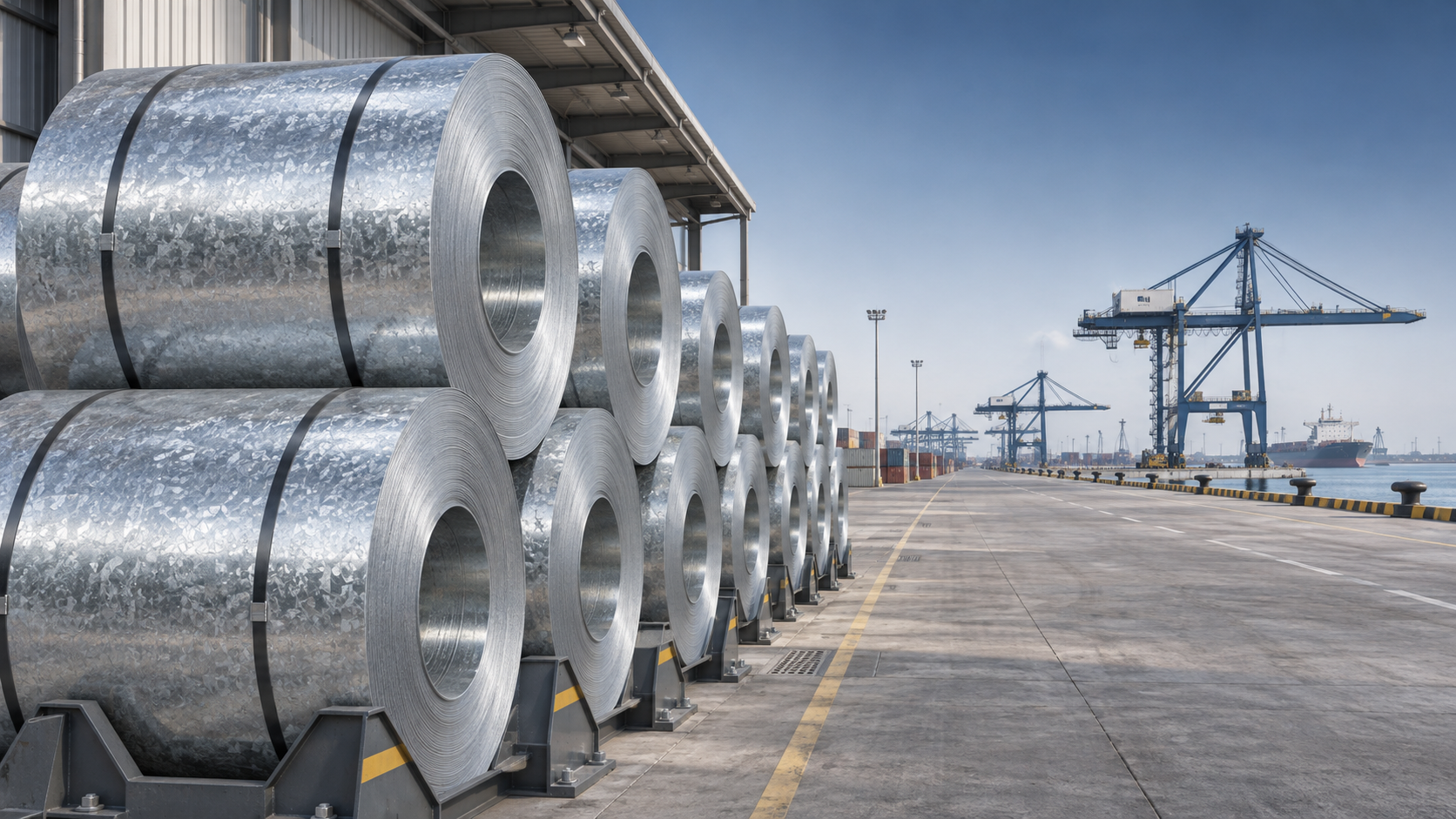
Korean steelmakers are seeking anti-dumping duties on hot-rolled galvanized steel imported from China, according to a report cited in the supplied information. The timing of the request is not specified. The proposal places a potential trade measure under scrutiny for producers, exporters and buyers, while raising questions about product coverage, procurement costs and delivery planning. At present, the information describes a request and a cautious government response, rather than an established duty on the product.
Import growth prompts a request for duties
According to The Chosun Ilbo, South Korean imports of Chinese hot-rolled galvanized steel, identified in the supplied information as HGI, reached 101,800 tonnes from January through September 2026. The volume was reported to have increased nearly fourfold year on year. Korean steel producers are lobbying the government to impose anti-dumping duties on the product.
The supplied summary says authorities in Seoul are cautious because applying additional duties directly, without a dedicated investigation, could expose the measure to a legal challenge at the World Trade Organization (WTO). South Korea has previously imposed related trade restrictions on cold-rolled galvanized steel, identified in the supplied information as CGI. The summary does not specify the date of the request or the details of the existing restrictions.
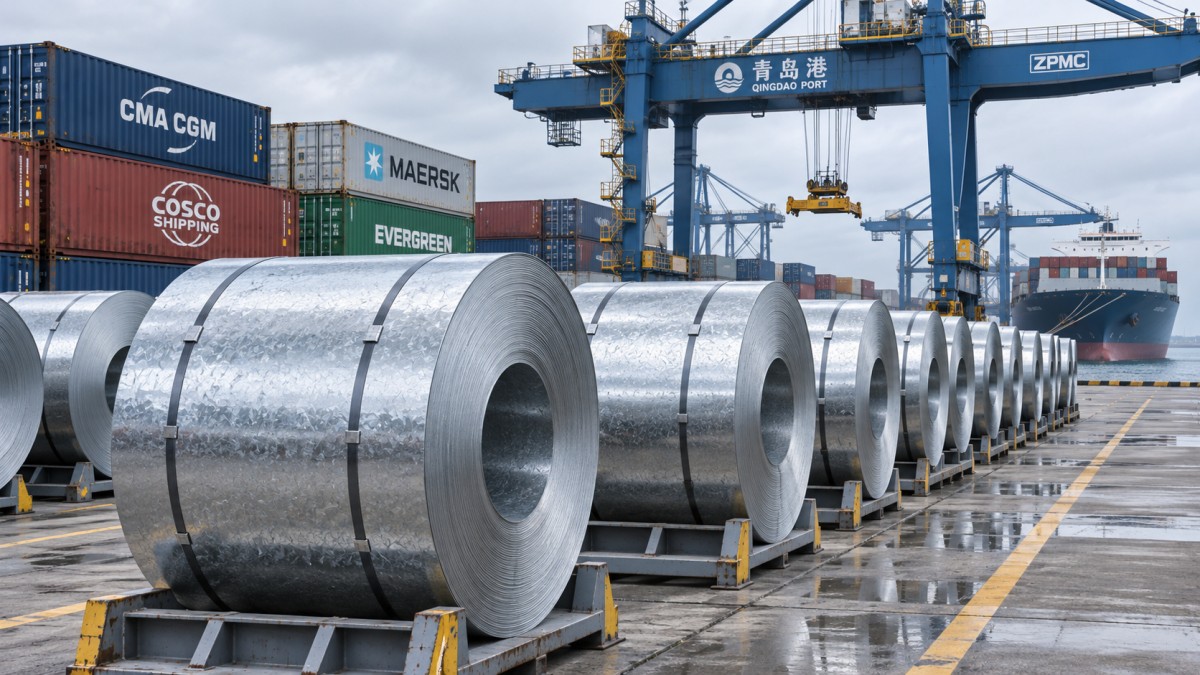
Where a potential measure could affect the supply chain
Chinese exporters face a question of product coverage
From an industry perspective, exporters of Chinese HGI to South Korea may need to assess whether a future measure would cover the products they sell. A duty, if introduced, could affect quotations, contract negotiations and the cost of supplying buyers in the Korean market. Its practical effect would depend on details that are not provided in the current information, including the products covered and the terms of any measure.
For exporters, the distinction between HGI and CGI deserves particular attention. The supplied information identifies an existing restriction on CGI and a request concerning HGI, but it does not establish that the existing restriction automatically applies to HGI. Sellers may therefore find it useful to review how their product descriptions, technical records and commercial documents identify the goods. Such a review would support later assessment if an official product definition or other guidance becomes available.
Buyers and distributors may reassess delivered costs
Analysis suggests that buyers and distributors handling Chinese HGI could face uncertainty when pricing orders that may be delivered after a decision on the request. A possible duty could change the total cost of an affected transaction, but the supplied information does not establish a rate, an effective date or a method of application. Those elements would be necessary before a buyer could quantify the impact of a particular measure.
Procurement teams may therefore wish to compare quotes on a consistent basis and consider how their contracts address changes in trade costs. For distributors, the same uncertainty could affect resale quotations and commitments to customers. These are planning considerations rather than evidence that costs have already changed as a result of a new HGI duty.
Processors and manufacturers need specification clarity
Businesses that purchase galvanized steel for processing or manufacturing could also be affected if a future measure changes the cost or availability of the material they use. The extent of any effect would depend on whether their purchases fall within the eventual product scope and on the terms agreed with suppliers. The current report does not establish that a measure will be adopted or that deliveries have been disrupted.
From a supply-chain perspective, a buyer considering another source or product could compare the proposed material against its existing technical and customer requirements before changing an order. Whether an alternative is suitable would need to be established for the intended use; the information supplied does not identify a replacement product or confirm that one would be interchangeable.
What companies can check while the request remains unresolved
Follow the status of any dedicated investigation
The reported concern about a WTO challenge makes the next procedural step especially relevant. Companies may monitor whether authorities announce a dedicated investigation and, if so, what products, transactions and periods it covers. They should also distinguish an industry request, the opening of an investigation and a final decision: the supplied information confirms the first and describes caution about taking direct action, but does not confirm the latter two.
Any subsequent official statement could also clarify how authorities address the relationship between HGI and the existing CGI restrictions. Until such information is available, it would be premature to assume that the same treatment, procedures or commercial consequences will apply to both products.
Review product descriptions and transaction records
Exporters and importers may benefit from checking that purchase orders, invoices and technical descriptions consistently identify the steel being traded. The immediate purpose is to make it easier to compare a transaction with any future published product scope. Businesses can also retain the records used to describe the product and its origin, subject to their own circumstances and any applicable requirements they independently verify.
The supplied information does not specify a new certificate, test report, customs document or classification requirement for HGI. Companies should therefore verify any such requirement against authoritative information if a measure or investigation is announced, instead of treating a proposed duty as proof that new documentation is already mandatory.
Test contract and delivery assumptions
Buyers and sellers may review outstanding quotations and planned deliveries to understand which party would bear an additional charge if a relevant trade measure were introduced. They could examine how their own contracts address price changes, timing and the allocation of trade-related costs. The outcome would depend on the contract and on the terms of any eventual measure; no particular contractual result follows from the report alone.
For orders still under negotiation, parties could consider discussing the treatment of potential changes openly and documenting any agreement. They may also assess whether procurement schedules allow time to respond to a future announcement. These steps are optional planning measures, not newly stated legal obligations.
Assess alternatives against the actual purchase
If exposure to Chinese HGI is material to a buyer, scenario planning may help identify which orders would need review under different outcomes. One scenario could assume that no new HGI duty is imposed; another could consider a measure whose scope and cost remain unknown. Comparing these possibilities can reveal where more information is needed without assigning an unsupported probability to either outcome.
Where a buyer explores alternative supply or material, it should consider price, delivery and product suitability together. A lower quoted price alone would not establish that an alternative meets the specifications attached to a purchase. Any change would need to be assessed against the relevant commercial and technical documents.
The distinction between a request and an enforceable measure
Editorial analysis suggests that this development is best understood as a trade-policy question to monitor. The reported increase in imports explains the context in which Korean producers are seeking action, while the stated concern about a possible WTO challenge points to uncertainty over how authorities might proceed. Neither point establishes that the government has decided to impose a new duty on HGI.
The existing CGI restrictions are relevant because they show that a related product is already subject to trade measures, according to the supplied summary. They do not, on their own, resolve whether HGI will be investigated or covered. The distinction matters for businesses that handle both products: assuming identical treatment could lead to inaccurate quotations or compliance planning.
What deserves closer attention is the content of any later official announcement: whether a dedicated investigation begins, how the product is defined, which trade is covered and whether any measure ultimately takes effect. Market participants may also watch for industry feedback and practical information about implementation. Until those details are available, estimates of the cost or timing of a new duty would remain speculative.
Keeping procurement decisions proportionate to the evidence
The reported request puts Chinese HGI exports to South Korea and Korean purchasing plans in focus, but the immediate business issue is uncertainty rather than a confirmed new charge. Producers, traders and buyers can prepare by identifying relevant transactions, checking product records and reviewing how their agreements handle changes in trade costs.
For now, the proportionate response is to monitor the policy process and preserve flexibility in commercial decisions. The need for any further action will depend on verified details of an investigation or measure, including its scope and implementation terms.
Basis of this report and matters to verify
This article is based on the supplied news title, event-time information and event summary, which cite The Chosun Ilbo. The event time was not specified in the supplied information. No specific official source link was provided, so the reported facts and any subsequent policy developments require continued verification.
Relevant sources to monitor include official announcements, information from trade or customs authorities, industry communications and authoritative media reporting. In particular, readers should verify any investigation, product definition, decision, implementation details and industry response before treating a proposed measure as an operative requirement.