

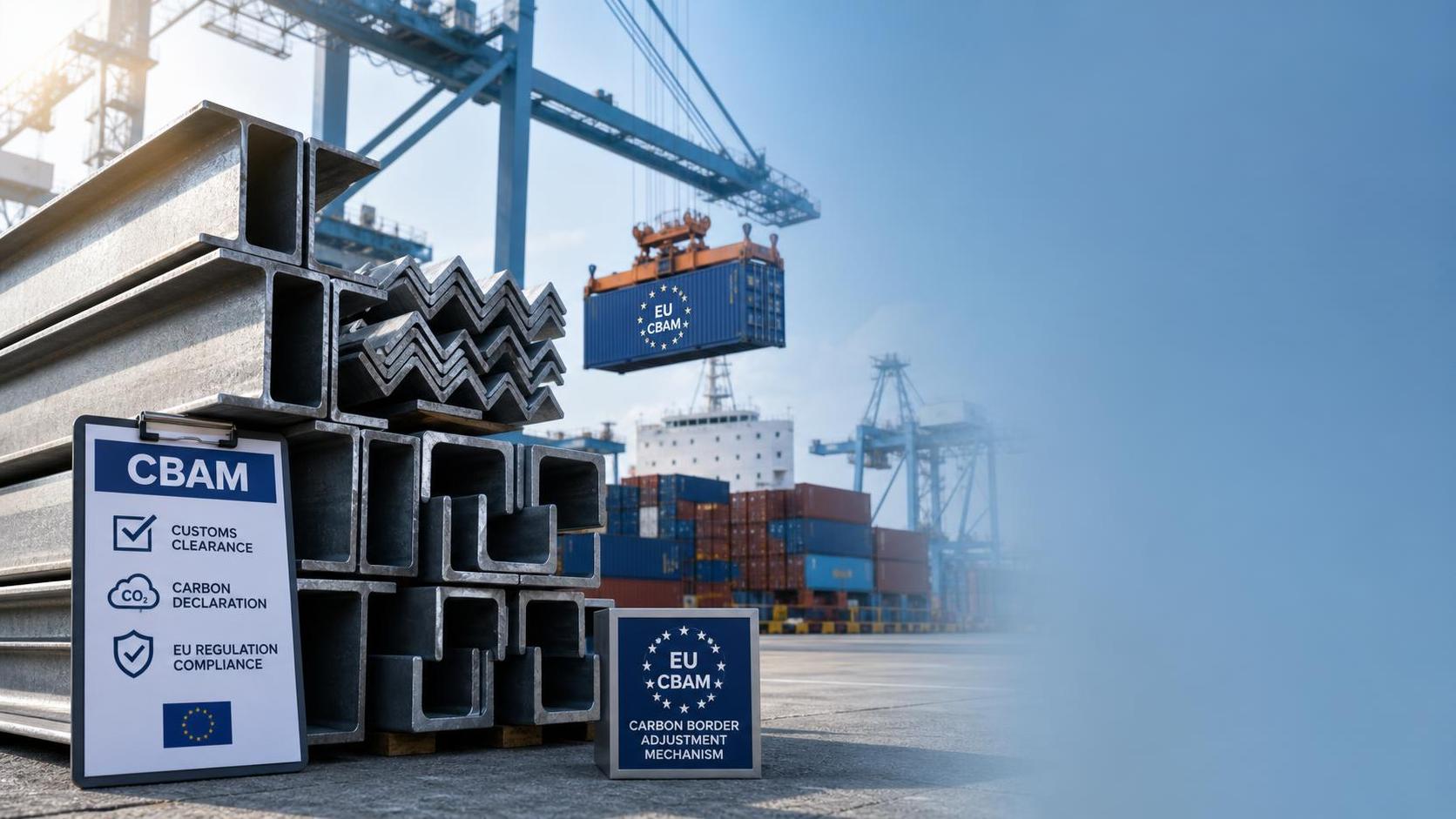
On July 24, 2026, the EU formally brought Phase 3 of the Carbon Border Adjustment Mechanism (CBAM) into force for a broader range of steel products, including hot-rolled, cold-rolled, and structural sections. For companies involved in steel exports to Europe, this is not just a reporting update: it directly affects customs clearance, landed cost calculation, and the preparation of compliance documents, with particular relevance for exporters, importers, and supply chain teams handling section steel shipments.

What Has Now Taken Effect
From July 24, 2026, Phase 3 of the EU CBAM formally covers all hot-rolled, cold-rolled, and structural steel products, including H-beams, angle steel, and channel steel. Importers are required to declare the embedded carbon emissions of each batch of imported sections through the CBAM system before customs clearance and to pre-purchase the corresponding number of CBAM certificates. According to the provided event summary, this change directly affects delivery procedures to the EU, cost accounting, and compliance document preparation for Chinese steel exporters. Suppliers that have not completed MRV (Monitoring, Reporting, and Verification) certification face the risk of customs delays or refusal of goods.
Where the Pressure Will Be Felt First
Export transactions tied to EU delivery schedules
From an industry perspective, direct trading companies are likely to feel the impact immediately because the new requirement is linked to pre-clearance declarations. The key pressure points are shipment readiness, customs timing, and the ability to provide embedded emissions data for each batch without disrupting delivery commitments.
Compliance work at the supplier level
Suppliers of hot-rolled, cold-rolled, and structural steel products may be affected because the summary makes clear that incomplete MRV certification creates a risk of delay or rejection. In practice, the most sensitive link is the readiness of supporting compliance records and whether supplier-side emissions data can be matched to specific export batches.
Costing and contract execution for EU-bound business
Importers and exporters involved in EU business will also need to pay closer attention to transaction costing, since CBAM certificates must be pre-purchased before customs clearance. Analysis shows that this makes carbon-related compliance part of the operational cost structure rather than a separate afterthought, which may affect quotation methods, delivery planning, and internal approvals.
Service providers supporting cross-border execution
Supply chain and customs service providers may see added execution risk because declaration timing, documentation completeness, and shipment coordination become more tightly connected. What deserves closer attention is whether documentation and customs preparation workflows are aligned early enough to avoid clearance disruption.
What Companies Should Watch Now
Whether product coverage touches current order books
Companies with EU-facing business should first verify whether their shipments fall within the covered categories of hot-rolled, cold-rolled, or structural steel products such as H-beams, angle steel, and channel steel. The practical issue is not abstract policy exposure, but whether existing and near-term orders now require embedded emissions reporting before clearance.
Readiness of MRV-related documentation
The provided information specifically highlights MRV certification as a compliance threshold tied to customs risk. Companies should therefore pay close attention to whether supplier qualifications and verification documents are complete, current, and usable for batch-level declaration requirements.
Coordination between emissions reporting and shipment release
Another immediate focus is the connection between carbon reporting and physical delivery. Observably, businesses need to distinguish between understanding the rule at a policy level and being able to execute it at shipment level, especially where declarations, certificate pre-purchase, and customs release are time-sensitive.
Customer communication and contingency planning
Where delivery to EU buyers is involved, firms should pay attention to communication around lead times, document readiness, and possible clearance disruptions. This is particularly relevant when a supplier has not yet completed MRV certification and the risk extends beyond internal compliance into contract performance.
Why This Matters Beyond a Single Filing Step
Analysis shows that this development is more appropriately understood as an operational compliance shift rather than a minor customs formality. The requirement to declare embedded carbon emissions for each batch and pre-purchase CBAM certificates moves carbon data into the center of export execution for covered steel products. At the same time, it would be premature to treat every downstream market outcome as settled fact. The more defensible reading, based on the provided information, is that the rule has already created a concrete execution threshold while broader commercial effects still require continued observation.
How the Market May Read This Stage
For the industry, the immediate significance lies in the fact that compliance, costing, and delivery are now more tightly linked for EU-bound steel sections. It is more appropriate to understand this as both a short-term operational change and a longer-term signal that carbon-related reporting is becoming a practical condition of cross-border steel trade. The direct outcomes identified so far are procedural and compliance-related, while the wider business impact will depend on how companies adapt their documentation and shipment workflows.
Basis of This Article
This article is based on the user-provided news title, event date, and event summary. For developments of this type, commonly relevant source categories may include official announcements, company disclosures, industry association updates, authoritative media reporting, and standard-setting documents. No specific official source link was provided in the input, so the precise source documentation still needs ongoing verification. Areas that merit continued attention include any further clarification of declaration practice, compliance documentation requirements, and execution details affecting EU-bound steel shipments.