


On October 1, 2026, a new compliance step begins for steel sections shipped into the EU under the latest transitional CBAM implementing rules released by the European Commission on July 16, 2026. The change centers on quarterly reporting of embedded carbon emissions for imported structural sections such as hot-rolled and cold-formed profiles, H-sections, and angle steel, together with verification by an EU-recognized third party. For exporters, importers, certification-related providers, and supply chain teams handling deliveries to the EU market, this matters because the reporting timetable, verification requirement, and MRV filing status can now affect customs timing, compliance preparation, and transaction costs.
What the New Transitional Rule Requires
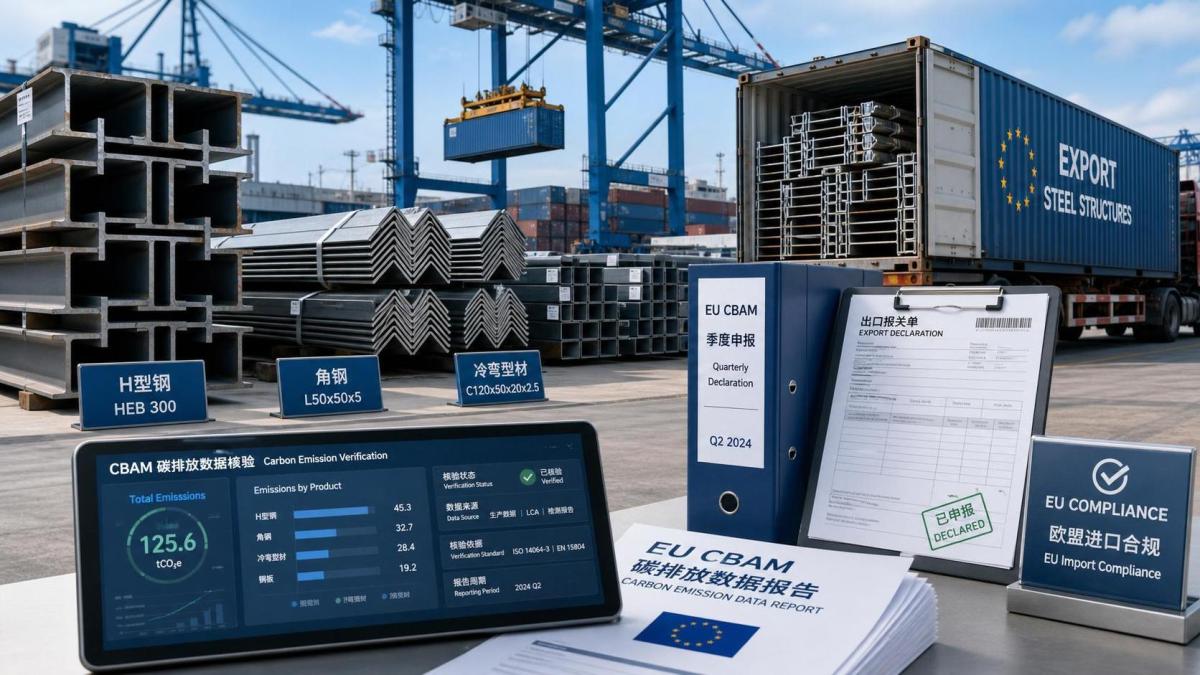
The confirmed change is that the European Commission issued a third version of the CBAM transitional implementing rules on July 16, 2026. Under that update, from October 1, 2026, importers of structural steel sections shipped to the EU, including hot-rolled or cold-formed sections, H-sections, and angle steel, must submit embedded carbon emissions data on a quarterly basis.
The same update also states that the reported data must be verified by an EU-recognized third party. The rule directly affects the compliance preparation cycle and certification-related costs of Chinese section steel exporters. The provided information also indicates that suppliers that have not completed MRV registration face a risk of customs clearance delays.
Where the Operational Pressure Is Likely to Appear
Export transactions tied to EU-bound steel sections
From an industry perspective, exporters are likely to feel the impact first because the rule is attached to products already moving into the EU market. The practical pressure point is not only product shipment itself, but also whether emissions data can be prepared in time for quarterly filing and whether the supporting information can pass third-party verification. What deserves closer attention is the link between compliance readiness and shipment continuity, especially where incomplete MRV registration may create clearance friction.
Importer-side filing and document coordination
Importers are directly named in the reporting requirement, so document collection and filing discipline become more important in the transaction flow. Observably, this can affect how importers coordinate with upstream suppliers on data submission, verification timing, and supporting records. The immediate business concern is whether the required carbon reporting package can be assembled on schedule each quarter.
Certification and verification support activities
The requirement for EU-recognized third-party verification means compliance work is no longer limited to internal reporting. Analysis shows that verification-related services and supporting documentation workflows may become a more active part of export preparation. For companies already supplying structural sections into the EU, the relevant change is that carbon data reporting now has an external review element that may influence timing and cost.
Procurement and delivery scheduling across the supply chain
For procurement teams, manufacturers, traders, and logistics coordinators, the rule may affect how shipment plans are sequenced. It is more appropriate to understand this as a compliance-linked delivery issue rather than only a reporting issue, because an MRV gap can translate into customs delay risk. That makes supplier qualification, document completeness, and filing readiness more relevant to order execution than before.
What Companies Should Watch Closely Now
Readiness of MRV-related filings
Analysis shows that one immediate priority is to verify whether MRV-related registration and internal reporting preparation are complete for EU-bound structural steel products. The supplied information does not provide detailed procedural steps, so this should be treated as a compliance checkpoint rather than as a confirmed filing outcome.
Quarterly data collection and record quality
What deserves closer attention is whether embedded carbon emissions data can be gathered in a repeatable quarterly process. Companies involved in export, supply, or customs-facing documentation should review whether internal records are sufficient to support recurring submissions and whether the data package is organized for verification.
Third-party verification timing and cost exposure
Observably, the third-party verification requirement can affect both lead time and cost planning. Since the input only confirms that EU-recognized third-party verification is required, companies should monitor how this requirement is reflected in practical review arrangements, documentation standards, and transaction planning, without assuming a uniform execution pattern at this stage.
Contract, delivery, and supplier qualification checks
From an industry perspective, businesses should also pay attention to whether supplier qualification, delivery commitments, and customs-facing document sets remain aligned with the new reporting schedule. This is particularly relevant where EU-bound shipments depend on multiple parties for emissions data, verification coordination, and filing support.
Why This Reads as an Execution Signal
Analysis shows that this update is more than a general policy direction. It points to a concrete compliance requirement with a defined start date and a specified reporting rhythm for affected steel sections. At the same time, it is still appropriate to keep some distance from firm conclusions on full market impact, because the provided information does not set out detailed enforcement practice, review timelines, or how market participants will adjust in operation.
Observably, the most meaningful signal for the industry is that CBAM-related compliance for structural steel imports is moving closer to transaction-level execution. That is why the market is likely to focus not only on the rule text itself, but also on verification practice, documentation expectations, and customs-facing implementation.
How This Update Is Best Understood at Present
At this stage, the development is best understood as a rule change with immediate operational relevance for EU-bound structural steel trade. The confirmed facts already point to quarterly carbon data submission, third-party verification, and customs delay risk where MRV filing is incomplete. A neutral reading is that the issue now sits at the intersection of compliance, trade execution, and delivery planning, rather than remaining a distant policy discussion.
For companies in the steel section export chain, the current task is not to assume broad market outcomes, but to track how the reporting, verification, and filing requirements are reflected in actual transactions and counterpart expectations after October 1, 2026.
Basis of This Article and What Still Needs Verification
This article is generated from the user-provided news title, event date, and event summary. It is written on the basis of the stated update that the European Commission released a third version of the CBAM transitional implementing rules on July 16, 2026, with quarterly embedded carbon reporting and EU-recognized third-party verification for certain steel section imports from October 1, 2026.
For events of this type, relevant source categories typically include official regulatory notices, releases from supervisory authorities, customs or trade administration information, industry association materials, standards-related documents, and reporting by authoritative media. A specific official source link was not provided in the input, so the exact official publication path still needs to be verified on an ongoing basis.
What still requires continued observation includes detailed implementation language, verification practice, certification-related interpretation, possible changes in tender or procurement documentation, industry feedback, and how affected companies execute MRV-related requirements in live shipments.