

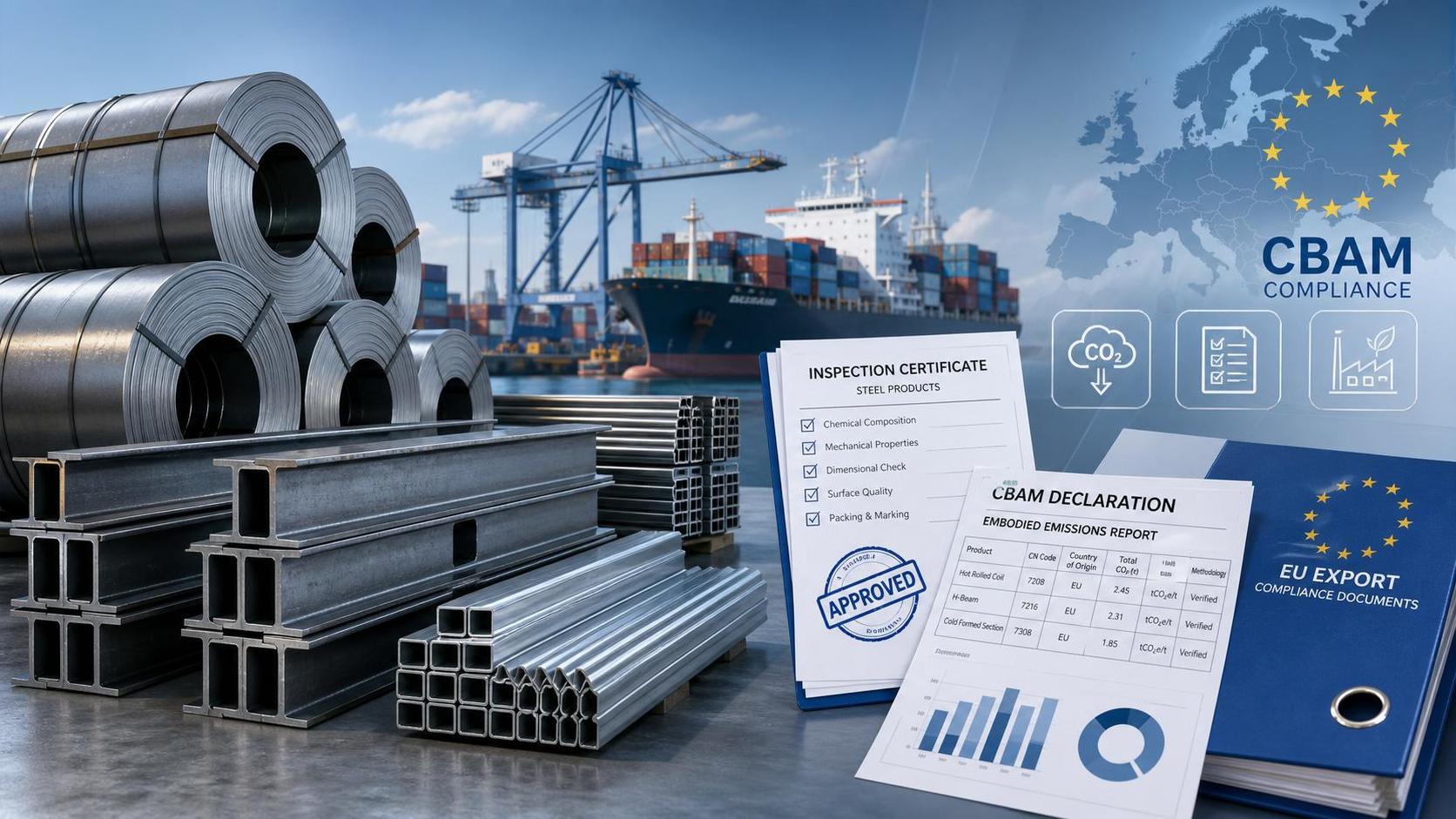
On July 10, 2026, the European Commission’s new transitional CBAM reporting obligation became mandatory for Chinese exporters shipping steel products into the EU. The development matters not only to exporters of hot-rolled coil, H-beams, and cold-formed sections, but also to manufacturers, traders, customs-facing teams, and supply chain service providers handling Chapter 72 and 73 products, because quarterly disclosure of embedded carbon emissions is now tied directly to customs clearance and to future access under the formal CBAM phase.
The immediate regulatory change now in force
According to the information provided, the European Commission issued an official notice on July 8, 2026 under Commission Implementing Regulation (EU) 2026/1392. From July 10, 2026, Chinese exporters sending steel finished products to the EU are required to submit quarterly declarations of embedded carbon emissions through the CBAM system.
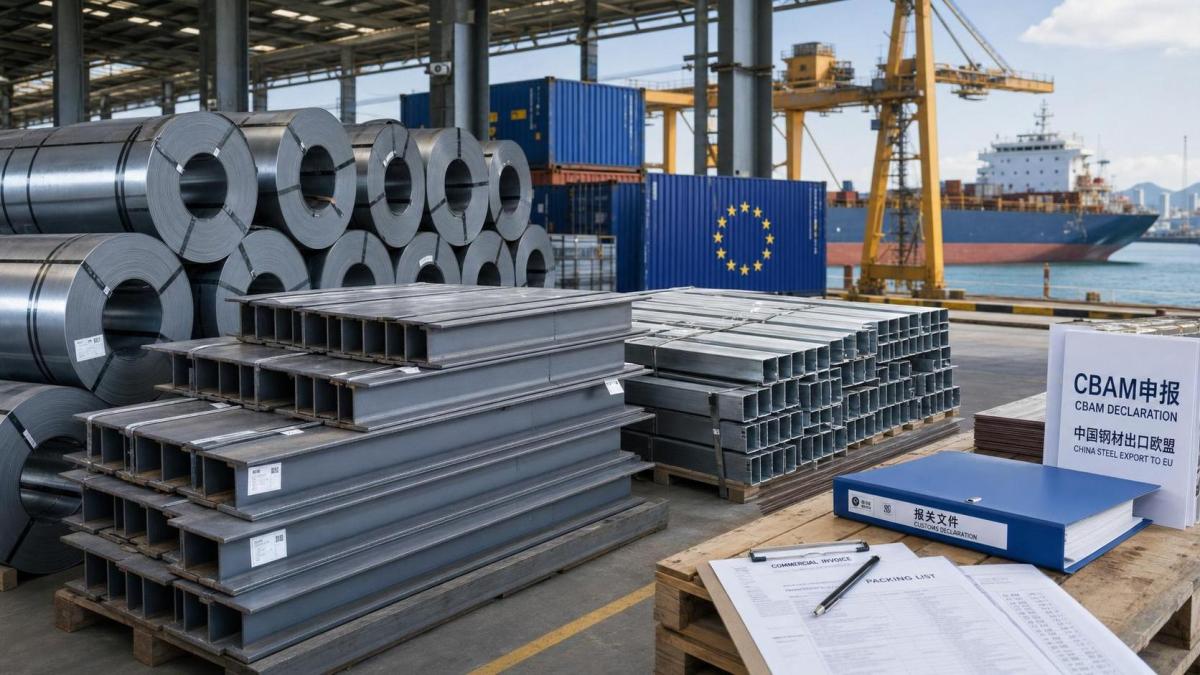
The requirement applies to exports covering all steel and section products under HS Chapters 72 and 73. The products specifically referenced include hot-rolled coil, H-shaped steel, and cold-formed sections. The provided information also states that failure to complete compliant reporting may affect customs clearance and later eligibility for entry into the formal implementation stage.
Where the impact is likely to be felt first
Export-facing steel suppliers move from shipment execution to reporting execution
From an industry perspective, direct exporters are the first group exposed to the operational impact because the new obligation is attached to EU-bound shipments. The effect is likely to appear in declaration workflows, document preparation, and internal coordination around quarterly submissions rather than only in pricing or sales discussions.
Processing and manufacturing companies face upstream data pressure
Analysis shows that manufacturers producing steel finished goods for EU delivery may be affected through the need to organize embedded-emissions information in a form that can support CBAM reporting. Even where the exporter is the reporting party, production-side data handling becomes more relevant because the scope reaches steel and section products across HS Chapters 72 and 73.
Traders and channel businesses may need tighter product-scope screening
Companies operating as distributors or trading intermediaries may need to pay closer attention to whether specific goods fall within the covered customs chapters. The practical impact is likely to center on contract review, product classification checks, and communication with downstream EU customers on reporting readiness.
Logistics and customs support providers enter a more compliance-sensitive role
Observably, service providers involved in customs handling and shipment coordination may also feel the change because non-compliant reporting could affect clearance. Their role is not the same as that of the exporter, but the timing of filings, completeness of supporting materials, and shipment scheduling may become more sensitive in day-to-day execution.
What companies should watch now
Confirm whether EU-bound products fall within the covered HS chapters
What deserves closer attention is product scope. The provided information makes clear that the requirement covers all steel and section exports under HS Chapters 72 and 73, so companies should first verify which EU-destined product lines are directly affected.
Prepare for quarterly CBAM submission as an operating task
The new requirement is not framed only as a policy signal; it is already an execution requirement from July 10, 2026. For affected businesses, the key issue is whether the internal process for quarterly reporting through the CBAM system is clear, assigned, and supported by the necessary documentation flow.
Distinguish policy publication from shipment-level implementation
Analysis shows that one practical risk is assuming that publication of a regulation and real shipment processing are the same thing. Companies should pay attention to how reporting obligations translate into actual customs and clearance procedures, especially because the supplied information states that non-compliance may affect customs treatment and later formal-stage access.
Strengthen communication across suppliers, exporters, and EU customers
Where several parties share responsibility for production, export documentation, and customer delivery, coordination becomes more important. The current issue is less about broad strategy and more about whether data, declarations, and shipment timing can be aligned without creating delays or qualification problems.
Why this looks like more than a short-term filing update
Observably, this development is best read as an active compliance threshold rather than a routine administrative notice. The rule has a clear effective date, a defined reporting channel, and stated consequences for non-compliance. That gives it immediate operational weight.
At the same time, it is more appropriate to understand this as both a short-term workflow change and a longer-term signal. In the short term, the focus is quarterly embedded-emissions reporting for covered exports. In the longer view, the stronger message is that access to the EU market for relevant steel products is becoming more closely linked to emissions-related disclosure discipline.
Further observation is still necessary because the provided information does not include additional implementation detail beyond the official notice, scope, effective date, reporting frequency, and stated consequences. For that reason, the market should watch how reporting practice and customs treatment interact in actual transactions.
How the market may best interpret this stage
This update should be taken seriously as an already effective compliance requirement for Chinese steel exporters shipping covered products to the EU. It does not by itself answer every operational question, but it clearly raises the reporting threshold for exporters and related supply chain participants.
From an industry perspective, the most balanced reading is that this is not merely a headline policy signal and not yet a complete picture of all downstream effects. It is a concrete near-term compliance change with longer-term significance, and it deserves continued attention from companies whose business depends on EU steel trade under HS Chapters 72 and 73.
Basis of this article and points requiring continued verification
This article is based on the user-provided news title, event date, and event summary. The confirmed information used here is limited to the stated July 10, 2026 effective date, the July 8, 2026 official announcement by the European Commission under Commission Implementing Regulation (EU) 2026/1392, the quarterly CBAM reporting requirement for embedded carbon emissions, the coverage of HS Chapters 72 and 73 steel and section exports, and the stated compliance consequences.
For this type of development, relevant source categories usually include official regulatory notices, company disclosures, industry association updates, authoritative media coverage, and standards or compliance-related documents. A specific official source link was not provided in the input, so continued verification remains necessary. The next points to watch are any further official wording, implementation clarifications, and practical treatment of reporting compliance in customs and market-access procedures.