


On July 18, 2026, the European Commission formally moved the carbon border adjustment mechanism for steel products into its third phase, extending the requirement to imports of hot-rolled, cold-rolled, and structural steel sections. For exporters, importers, and supply-chain partners handling H-beams, angles, channels, and related products, the change matters because customs clearance is now tied more directly to carbon data submission and certificate pre-purchase, with immediate implications for delivery timing, cost calculation, and commercial coordination.
What changed on July 18
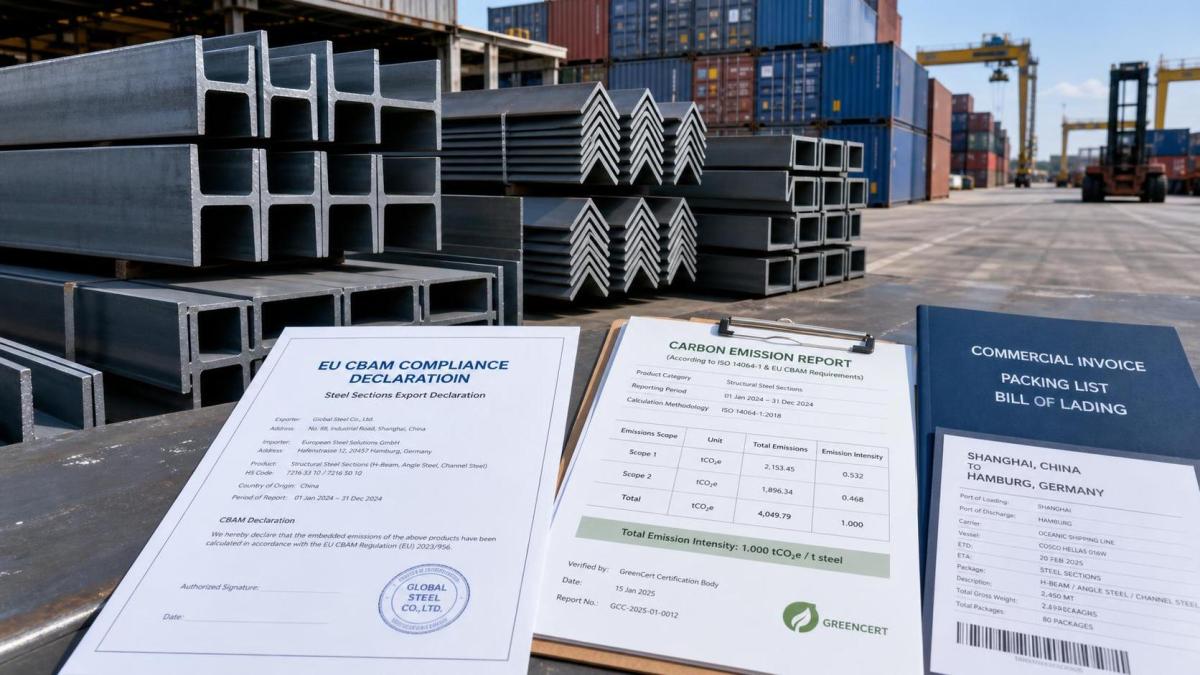
From July 18, 2026, the EU CBAM third phase covers all imported hot-rolled, cold-rolled, and structural steel products, including H-beams, angle steel, and channel steel. Importers are required to declare, through the CBAM system, the measured or default embedded carbon emissions value for each batch of products and to pre-purchase the corresponding number of CBAM certificates. According to the provided information, failure to complete compliant declarations may result in customs clearance delays or the return of goods. The requirement directly affects the delivery pace of orders, cost accounting, and customer cooperation arrangements for Chinese steel exporters.
Where the pressure is likely to appear first
Export transactions now depend more heavily on batch-level carbon data
From an industry perspective, exporters shipping covered steel products are likely to feel the impact first because the new requirement is linked to each batch. That means order execution is no longer shaped only by product specification, quantity, and shipping schedule, but also by whether embedded carbon information can be prepared in a form that supports the importer's declaration process.
Import-side coordination becomes part of delivery planning
Importers are now responsible for submitting data through the CBAM system and pre-purchasing certificates. Observably, this makes importer-exporter coordination more operational than before. Commercial discussions may need to cover not only price and lead time, but also which carbon values are used, when data is provided, and how batch documentation aligns with customs timing.
Costing and procurement discussions may become more detailed
What deserves closer attention is the effect on cost accounting and procurement decisions. Because certificate pre-purchase is now part of the process, companies involved in quoting, sourcing, and order confirmation may need to review how carbon-related information is reflected in pricing assumptions, purchasing schedules, and contract discussions. The provided information does not establish a uniform market outcome, but it does indicate a more compliance-linked trade process.
Logistics and customs handling face a higher compliance sensitivity
Supply-chain service providers, customs-facing teams, and delivery coordinators may also be affected because non-compliant declarations can lead to delayed clearance or returned cargo. Analysis shows that document readiness and timing discipline are likely to become more important in shipment execution for the covered steel categories.
Practical points companies should monitor now
Readiness of emissions-related documentation
Analysis shows that companies involved in covered exports should closely check whether batch-level embedded carbon data can be prepared consistently, whether measured values are available, and how default values may be used where applicable. The key issue is not only having data, but having data that supports the importer's filing process.
Contract and customer coordination around responsibility boundaries
What deserves closer attention is how responsibilities are allocated between exporter and importer. Since the importer must file through the CBAM system and pre-purchase certificates, companies may need to pay closer attention to commercial terms, submission timing, and document handover points in customer cooperation.
Delivery schedules and shipment release risk
Observably, delivery planning may need a wider compliance buffer. Where declarations are incomplete or inconsistent, the immediate risk described in the provided information is customs delay or return of goods. For that reason, shipment scheduling, release timing, and supporting paperwork deserve closer operational review.
Ongoing attention to execution language and filing practice
The provided information confirms the rule change and its direct compliance consequence, but it does not provide further operational detail. It is therefore more appropriate to monitor how official wording, filing practice, procurement documents, and customer requirements are applied in actual transactions before treating any single market response as settled.
How this development is best understood
As an editorial observation, this update is better understood as an implemented compliance change rather than a distant policy signal. At the same time, it should not yet be overstated as a fully settled operating model across every transaction scenario, because the provided information does not include detailed enforcement practice beyond declaration, certificate pre-purchase, and the stated customs consequences. From an industry perspective, the most useful reading is that carbon data has moved closer to becoming a transaction-level trade condition for the covered steel imports.
A rule change with immediate trade relevance
In summary, the July 18, 2026 move into CBAM phase three signals a concrete change in how certain steel imports into the EU must be handled. The immediate significance lies in the link between embedded carbon reporting, certificate preparation, and customs clearance. It is more appropriate to understand this development as a landed execution requirement with clear operational relevance, while continuing to watch how filing practice, customer coordination, and market feedback evolve in day-to-day trade.
Basis of this article and points for further verification
This article is based on the user-provided news title, event date, and event summary. For events of this kind, relevant source types typically include official announcements, releases from regulatory authorities, customs or trade administration information, industry association updates, standards-related documents, and reporting by authoritative media. A specific official source link was not provided in the input, so the precise official reference still needs to be verified on an ongoing basis. Further observation is also needed on detailed policy interpretation, certification and filing practice, procurement document changes, market feedback, and how companies implement the requirement in actual export operations.