

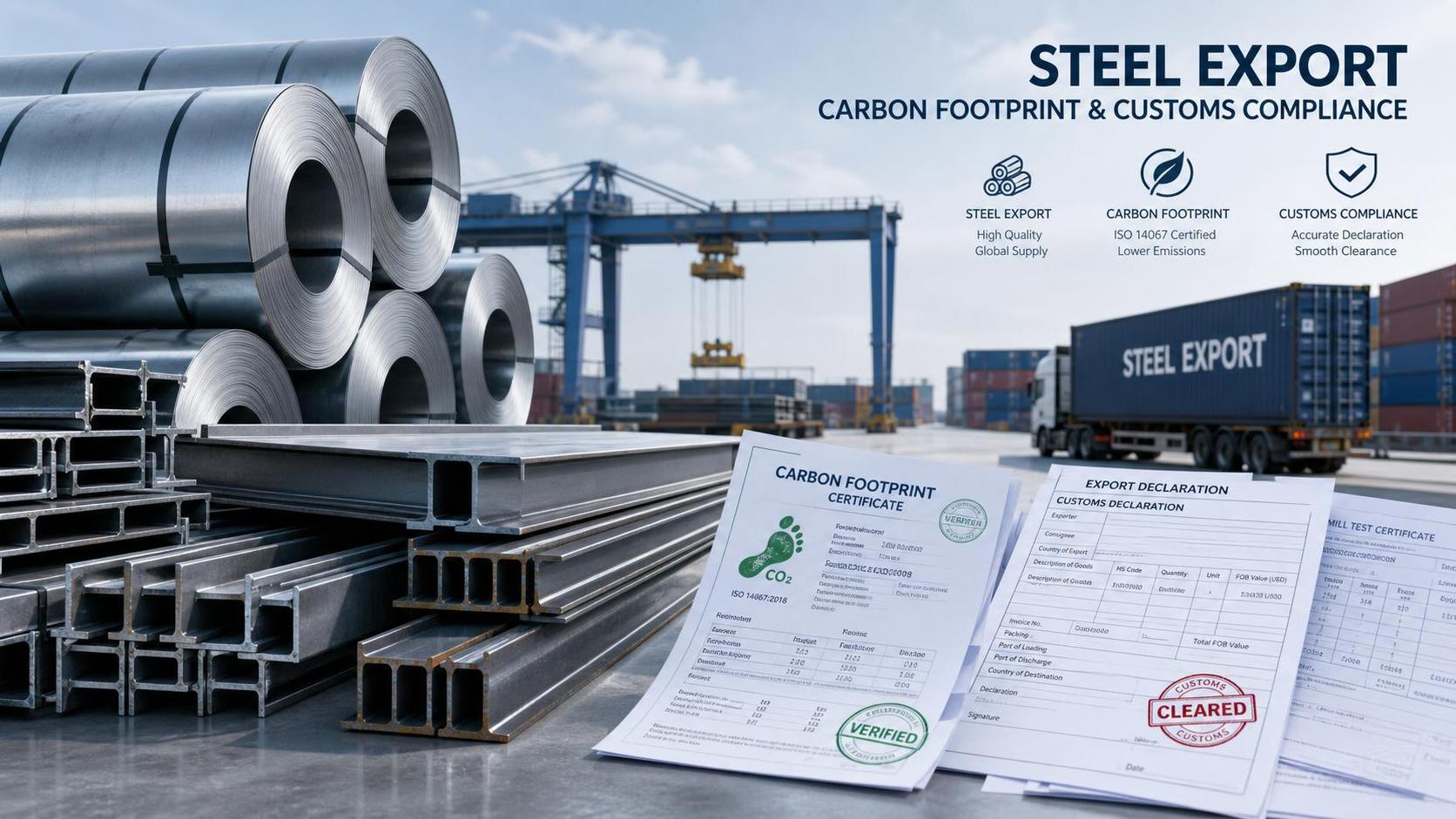
On August 14, 2026, China’s General Administration of Customs updated export declaration requirements for certain steel products by adding a mandatory certified carbon footprint declaration for specified shipments to the EU, South Korea, Canada, and the UK. For exporters of structural steel products such as hot-rolled coil, H-beams, I-beams, and channels, this is not only a customs filing change but also a compliance issue that may affect document preparation, clearance timing, and delivery planning.
What the new filing requirement now covers
According to the information provided, the General Administration of Customs issued the Notice on Further Standardizing Declaration Elements for Iron and Steel Export Commodities on August 14, 2026. Starting from September 1, 2026, exports of major structural steel products including hot-rolled coil, H-beams, I-beams, and channels to the EU, South Korea, Canada, and the UK must include a certified carbon footprint declaration, which will also become a required customs declaration field.
If a shipment does not provide a compliant declaration, or if the submitted data is considered questionable, it will trigger manual review. The information provided states that the average customs clearance cycle for such batches will be extended by five to eight working days.
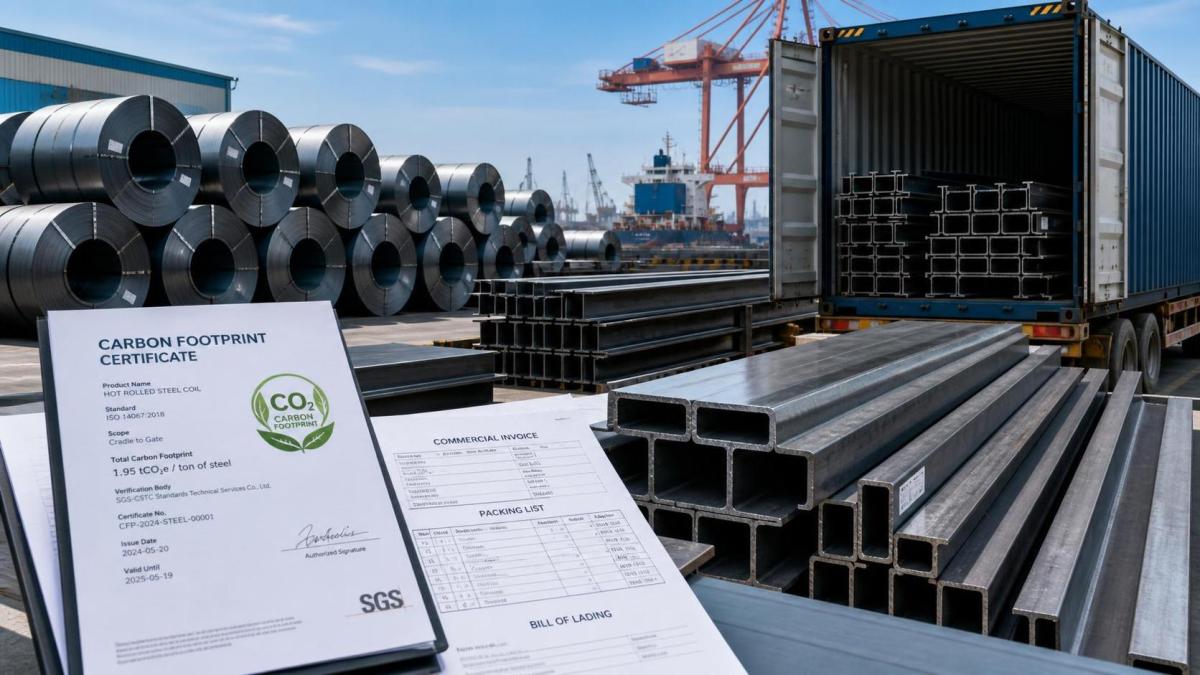
Where operational pressure may appear first
Exporters shipping the covered steel categories
From an industry perspective, the most immediate impact is likely to fall on exporters handling the listed steel products to the named destinations. The practical pressure point is documentation readiness: carbon footprint data is no longer only a supporting file in some transactions, but part of the formal declaration process. Analysis suggests these companies should pay closer attention to whether internal export documentation, product-level data collection, and customs filing workflows can support the new required field without delay.
Manufacturers and processors supplying export orders
For mills, processors, and manufacturers serving export-oriented orders, the change may extend upstream into production records and supporting technical files. Although the summary does not define the exact data methodology, it is reasonable to observe that any certified declaration requirement can increase the need for traceable product information and closer coordination between production, quality, and trade teams. This is especially relevant where delivery schedules are tight and document completion occurs close to shipment.
Supply chain and customs service providers
Customs brokers, logistics coordinators, and other supply chain service providers may also face added execution risk. Analysis suggests their role could shift from routine filing support to earlier-stage document checking, because missing or doubtful declaration data now carries a stated clearance consequence. For service providers, attention is likely to center on document completeness, filing consistency, and communication with exporters before cargo reaches the declaration stage.
Buyers and procurement teams in destination markets
For overseas buyers and procurement teams sourcing the covered steel products, the rule change may matter less as a policy headline and more as a delivery-management issue. The provided information indicates that manual review can lengthen customs clearance by five to eight working days, so purchasers may need to examine whether contract schedules, shipment windows, and document handover expectations remain realistic under the new requirement.
What companies should review before the rule takes effect
Check whether current export files can support a certified declaration
The first practical question is whether existing export documentation can be matched to a certified carbon footprint declaration in a form usable for customs filing. Since the input information does not provide detailed implementation criteria, companies should treat this as a verification task rather than assume their current files already meet the new requirement.
Reassess timing risk in shipment and delivery planning
Because the provided summary explicitly mentions manual review and a longer average clearance cycle for non-compliant or questionable batches, exporters and buyers should review delivery plans, shipping cutoffs, and buffer time. At this stage, it is more appropriate to treat the announced five-to-eight-working-day delay as a compliance-triggered operational risk, not as an automatic outcome for every shipment.
Focus on the covered products and named destination markets
Companies do not need to generalize beyond the published scope. The immediate review should stay centered on the listed product categories and the four destination markets identified in the provided information. This helps avoid overextending compliance resources while still addressing the most direct exposure.
Watch for further clarification in execution practice
The event summary confirms the new requirement and the stated clearance consequence, but it does not provide detailed guidance on how doubtful data will be judged in practice or how certification review will be handled operationally. For that reason, businesses should continue monitoring follow-up wording, implementation interpretations, and transaction-level filing experience before making broader process changes.
Why this matters beyond a single customs form update
Analysis suggests this development is best understood as a concrete execution signal rather than a purely symbolic policy reference. The requirement is tied directly to export declaration elements and has a defined effective date, covered products, covered destinations, and a stated customs review consequence. That gives it immediate operational relevance for companies already active in the affected trade flows.
At the same time, this is still a rule change whose full market impact may depend on subsequent implementation details and how consistently review standards are applied. What deserves closer attention now is not broad speculation, but whether certification handling, declaration review practice, and shipment execution begin to change in a measurable way after September 1, 2026.
How the market may need to frame this update
A balanced reading is that this is neither a minor administrative adjustment nor a basis for sweeping conclusions. It is a specific compliance requirement with the potential to affect customs timing, document readiness, and coordination across exporters, suppliers, and service providers. For companies within scope, the appropriate response is to review filing readiness and delivery exposure early, while keeping later judgments tied to actual enforcement practice and further official clarification.
Basis of this article and what still needs verification
This article is based on the user-provided news title, event date, and event summary. For developments of this type, relevant source categories would typically include official notices, releases from regulatory authorities, customs or trade administration information, industry association updates, standard-related documents, and reporting by authoritative media. A specific official source link was not provided in the input, so the underlying notice text and any follow-up implementation details still need to be verified on an ongoing basis.
Further observation should focus on later policy detail, certification interpretation in practice, possible changes in tender or procurement documents, actual trade execution outcomes, industry feedback, and how companies within the affected supply chain implement the new declaration requirement.